








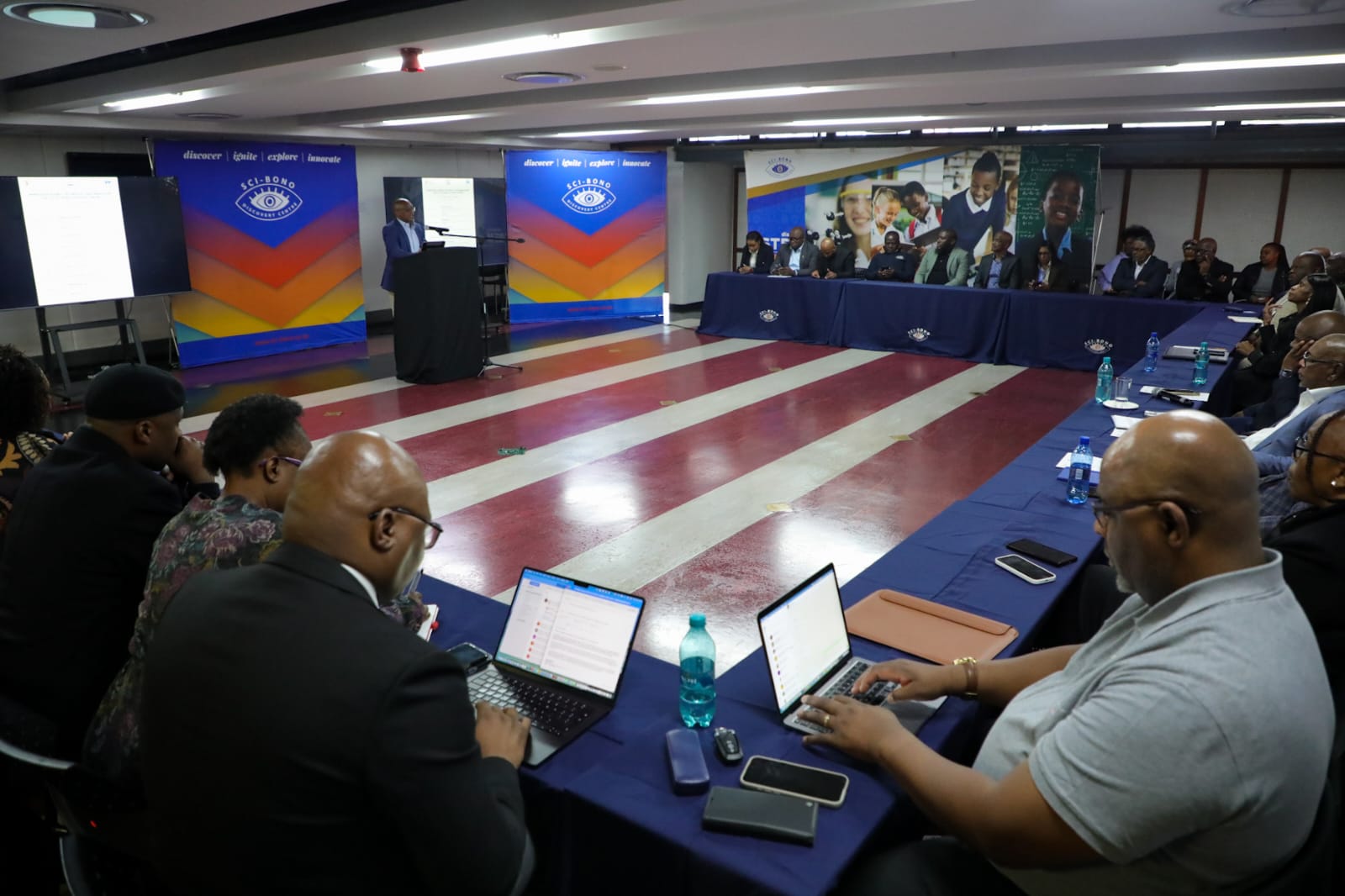
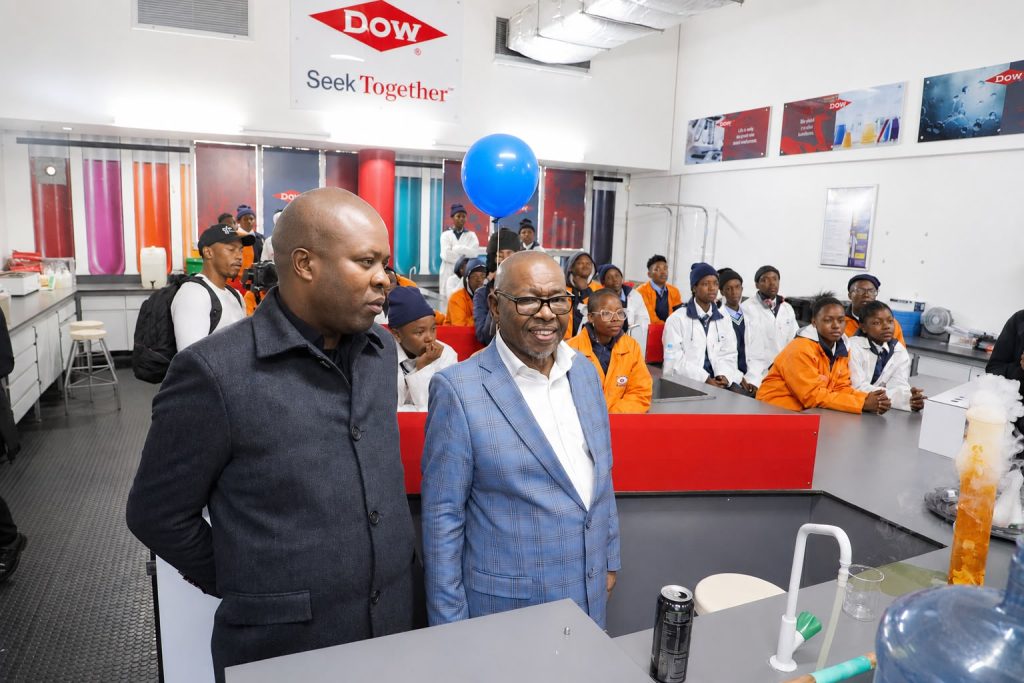
Strengthening STREAM education (Science, Technology, Research, Engineering, Arts, and Mathematics) and inspiring the next generation of innovators took centre stage as the Honourable Minister of Science, Technology and Innovation, Prof. Blade Nzimande, conducted an official visit to Africa’s largest science centre, the Sci-Bono Discovery Centre, on Friday, 24 July.
This high-profile engagement took place during Science Month; an initiative celebrated throughout July to promote public awareness and engagement with science and technology across South Africa.
The visit focused on expanding public science engagement, securing financial sustainability for science centres, and driving local technological innovation.
Speaking at the event, Minister Nzimande praised Sci-Bono for its long-standing role in advancing and deepening STREAM education and youth empowerment, especially during this critical month of scientific reflection.
As the largest science centre on the African continent, Sci-Bono serves as a central infrastructure asset for South Africa’s National System of Innovation (NSI). The centre is a primary knowledge intermediary, translating complex scientific concepts into interactive public learning and immersive experiences.
Strategically, Sci-Bono fills a critical educational gap by offering specialised support for science, technology, engineering and Maths (STEM) education, teacher training, and career development. By reducing direct and indirect barriers to high-tech fields and careers, the centre functions as a premier engine for digital equity, driving youth employability and social inclusion.
The high-level engagement was further strengthened by the presence of Gauteng MEC for Education, Sport, Arts, Culture and Recreation, Honourable Lebogang Maile, who underlined the provincial government’s commitment to integrating world-class science education into local school curricula and supporting community-based innovation hubs.
Also in attendance was Dr. Mamoeletsi Mosia, Managing Director of the South African Agency for Science and Technology Advancement (NRF-SAASTA).
Together, their attendance highlights the strategic, multi-layered partnership between national ministry, provincial leadership, and science centres to create a unified approach towards public science literacy and STEM outreach across South Africa.
Minister Nzimande explicitly stated during his address that science centres are a cornerstone of South Africa’s public science framework, serving as the ultimate bedrock for fostering grassroots curiosity and technological literacy.
The DSTI continues to support science centres through its programmatic support framework and quality accreditation systems. Sci-Bono remains the main host for national youth initiatives not only during Science Month but throughout the year, occasionally doing so entirely through its own resources and regularly host unemployed STEM graduates for a 12-month paid work exposure funded by the DSTI to boost operational capacity, while championing a national youth initiative aligned with the National Youth Policy.
The Department of Science, Technology and Innovation (DSTI) and Sci-Bono leadership are actively negotiating a new, sustainable partnership-based model to help mitigate the resource constraints that threaten the centre’s ability to fulfil its core mandate.
The Minister also shared key insights from his recent official diplomatic tour of rare scientific artefacts, cutting-edge AI-driven science museums in
Shanghai, China.
He emphasised the urgent need to cultivate similar interactive learning spaces to spark local enthusiasm for science.
The DSTI is pushing for stronger government-industry collaborations, including the establishment of science and technology parks within South Africa’s Special Economic Zones, discussions are underway with Sasol.
Minister Nzimande highlighted that while the National System of Innovation is strong nationally, it remains weak at provincial, regional and local levels. He challenged provincial governments and hubs like Sci-Bono to act as key links to bridge these gaps and achieve this vital national objective.