












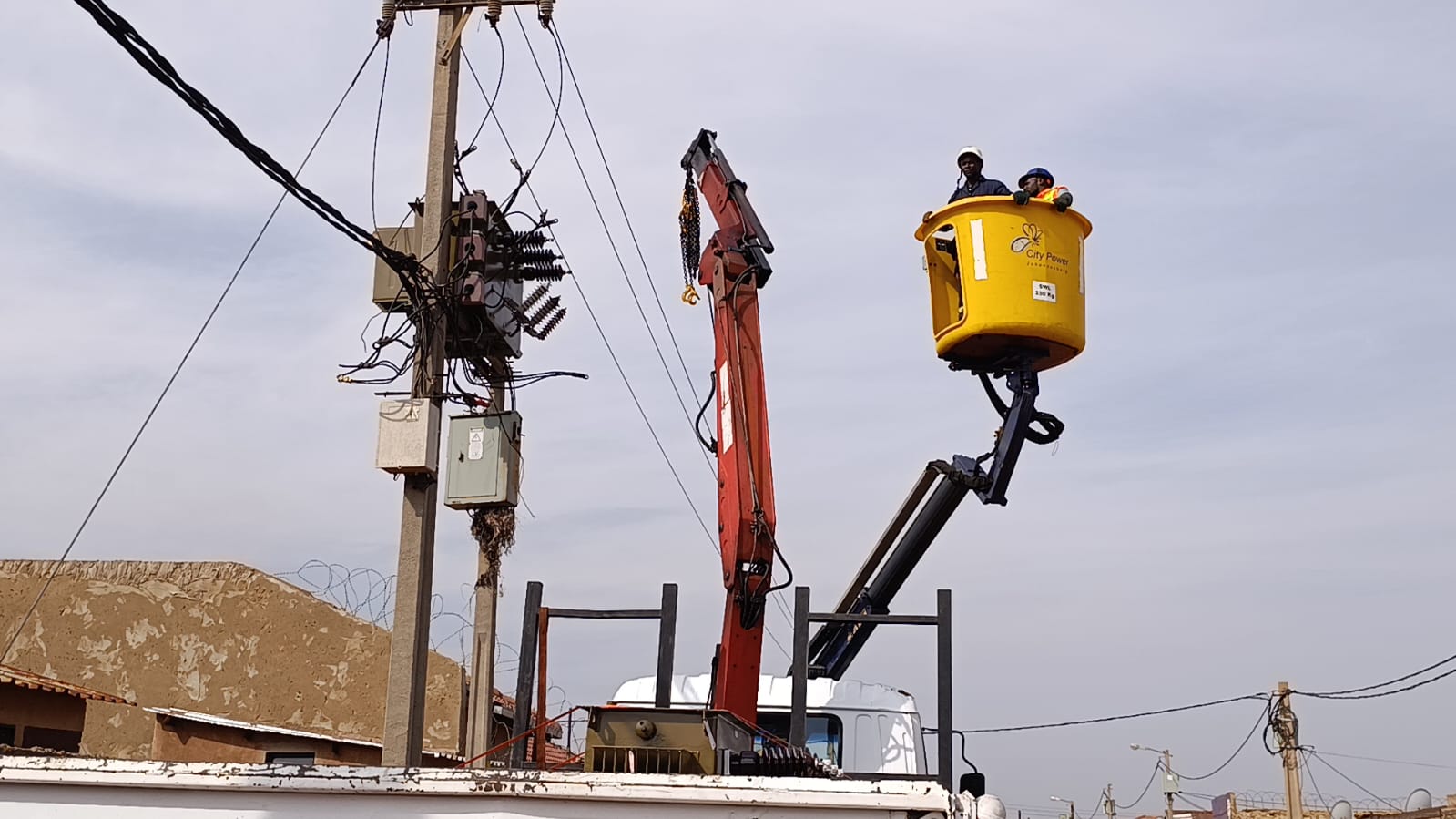
City Power has intensified the implementation of its electricity normalisation programme in Tshepisong and Alexandra, with teams replacing critical infrastructure in Tshepisong and commencing a comprehensive network audit in Alexandra today.
The interventions follow commitments made during recent Electricity Imbizos in the two communities and mark the start of work on the ground to address persistent electricity supply challenges, illegal connections, meter bypassing, low electricity vending and pressure on infrastructure.
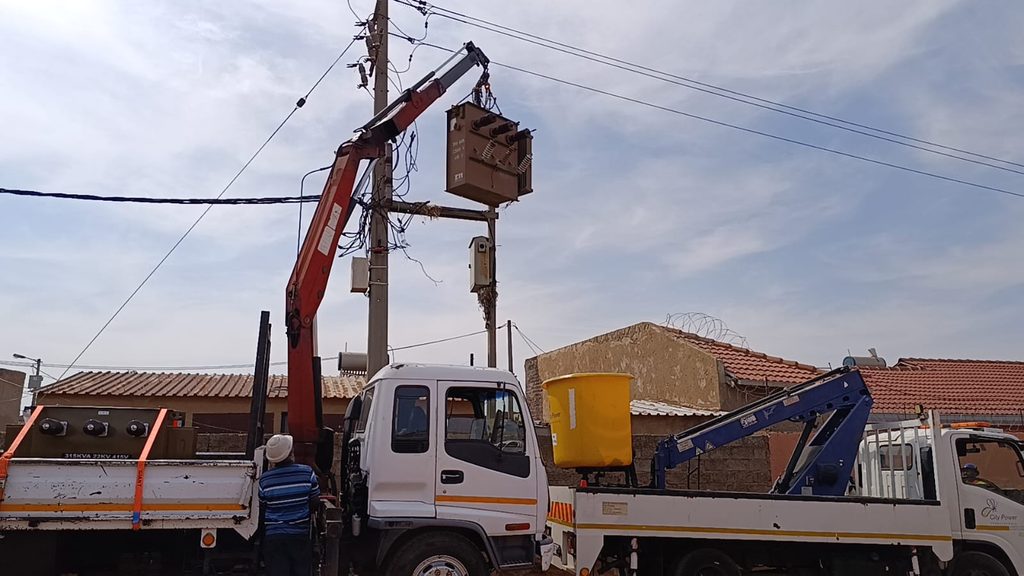
In Tshepisong, City Power replaced two transformers, including the transformer supplying Harry Gwala Primary School, as part of the first phase of a broader normalisation programme that will be implemented over a period of up to six months.
The transformer supplying Harry Gwala Primary School had been damaged as a result of illegal connections, affecting the reliability of electricity supply to the school and surrounding households.
The transformer was upgraded from 200kVA to 315kVA to accommodate increased electricity demand in the area, including demand arising from the expansion of households.
General Manager for the Roodepoort Service Delivery Centre, Sibusiso Xulu, said the upgrade was necessary to strengthen the local network and accommodate the changing electricity requirements of the community.
“We have changed the transformer, which was 200kVA, replacing it with a 315kVA. Automatically, that is an upgrade to be able to accommodate all the residents that have decided to extend their houses in Tshepisong,” said Xulu.
The Tshepisong intervention follows the Electricity Imbizo held on 27 August 2026, where City Power committed to implementing a comprehensive normalisation programme to address challenges affecting the local electricity network.
The programme will include infrastructure assessments and repairs, the replacement of service cables, audits of electricity meters, the identification and removal of illegal connections, the correction of bypassed meters and measures to improve electricity vending.
As part of the intervention, City Power will replace damaged service cables serving customers in Tshepisong as a once-off reprieve to support the normalisation process. Under normal circumstances, the replacement of service cables is the responsibility of the customer.
The scale of non-vending in Tshepisong remains a serious concern. The network serves an estimated 12 000 customers. Of the 11 958 registered prepaid customers, only 202 are actively purchasing electricity, while 11 756 are classified as non-vending.
Although prepaid meters were installed across the network during 2026, many have subsequently been bypassed. This has contributed to unmetered consumption, pressure on infrastructure and continued revenue losses.
Acting CEO Charles Tlouane, who led the operational briefing in Roodepoort ahead of the commencement of the programme, called on residents to protect the infrastructure being installed.
“We are asking residents to protect these transformers and all the infrastructure that we are putting in place. If you see an unauthorised person tampering with a transformer or any of our infrastructure, raise the alarm immediately and alert City Power. These interventions are being made for the benefit of the community, and we need everyone to play their part in protecting them.” Local resident Thobeka Nxeba was among residents who welcomed the intervention and expressed hope that the programme would bring greater stability to the area.
“We are willing to pay for electricity. We are hopeful that the community and City Power won’t be having problems going forward.”
City Power has also introduced a mobile customer service office in Tshepisong as part of strengthening its social compact with residents. The mobile office will remain in the area throughout the normalisation programme and beyond, assisting residents with electricity queries, billing-related matters, Free Basic Electricity and Expanded Social Package registration.
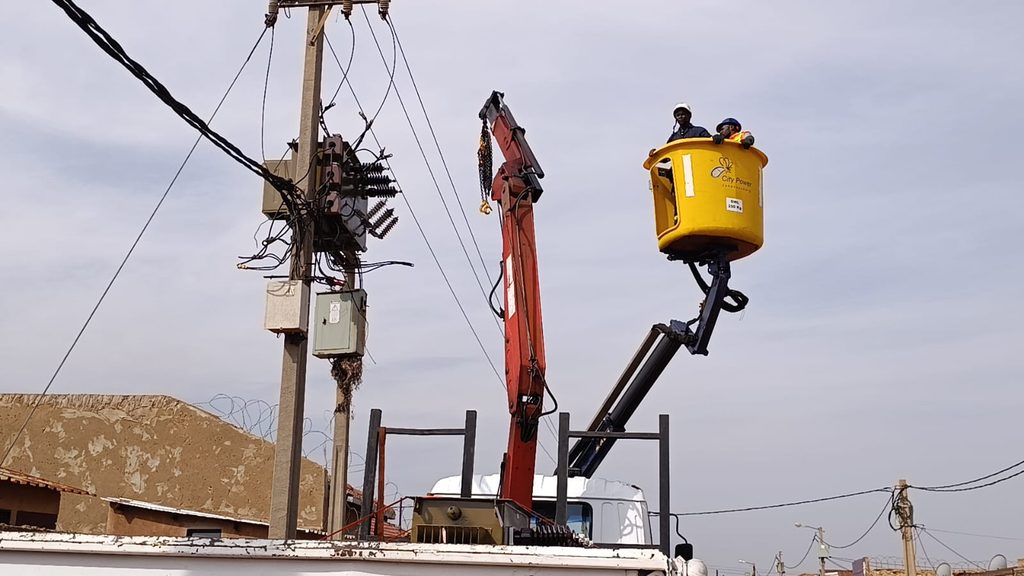
While infrastructure replacement was underway in Tshepisong, City Power teams also commenced the first phase of the Alexandra normalisation programme today through a comprehensive electricity network audit in Ward 76, starting in 22nd Avenue.
The Alexandra intervention follows an Imbizo addressed by the Executive Mayor of Johannesburg, where residents raised concerns about persistent electricity supply and service delivery challenges.
The audit is intended to establish an accurate picture of the electricity network before further interventions are implemented. Teams are recording the number and condition of meters, identifying customers who are purchasing electricity, locating bypassed meters and illegal connections, and assessing infrastructure requiring repairs or replacement.
Tlouane said the information gathered through the audit would allow City Power to quantify the challenges and determine the appropriate interventions.
“We did promise that we will come and start with the normalisation process, and this normalisation will have to start basically with the audits so that at least we quantify. We need to know exactly who we need to service, how many people we need to service, how many are buying, how many are not buying, how many meters are online, how many are not online, and how many are bypassed,” said Tlouane.
Preliminary information indicates that Alexandra is also experiencing extremely low electricity vending. There are approximately 10 500 customers in the area, but only about 300 are currently purchasing electricity.
Illegal connections and meter bypassing, including along London Road, continue to place considerable pressure on the electricity network. The high levels of unmetered consumption contribute to overloading and equipment failures, requiring City Power to repeatedly direct resources towards the replacement of damaged transformers and other infrastructure.
The normalisation programme is intended to address these underlying causes rather than continuously replacing infrastructure without correcting the conditions contributing to its failure.
City Power will not charge residents a fee to participate in the Alexandra normalisation exercise. However, customers whose bypassed meters are replaced will be required to demonstrate their commitment to purchasing electricity through a once-off R500 electricity purchase. The electricity purchased will be credited to the new meter and the R500 is not a monthly payment.
Qualifying pensioners and customers registered for Free Basic Electricity through the Expanded Social Package will be assisted according to the applicable requirements.
City Power is also assessing properties where residential premises have been converted or extended for commercial activities, including salons, shebeens, car washes and properties with multiple backyard rooms.
Where properties are being used for business purposes, customers will need to be appropriately classified and placed on suitable tariffs and metering arrangements that reflect their electricity use.
The normalisation process provides customers with an opportunity to regularise their electricity connections.
Once City Power has completed normalisation in an area, deliberate meter bypassing, tampering and illegal reconnections will result in enforcement action.
“What we have basically demonstrated as City Power is the fact that we will act. If we find that where we have passed with normalisation, there is some disconnection, we will switch them off,” said Tlouane.
Customers found to have bypassed their meters after normalisation may be disconnected and will be liable for the applicable penalty, which is approximately R14 000 for a single-phase connection.
The interventions underway in Tshepisong and Alexandra form part of City Power’s broader efforts to reduce technical and non-technical electricity losses while improving the reliability and sustainability of electricity supply.
Electricity infrastructure cannot be sustained where consumption is largely unmetered and revenue collection remains extremely low. Revenue collected from electricity sales supports the purchase of electricity, materials, repairs, maintenance and investment in the network.
The normalisation programme therefore seeks to establish a fair and sustainable electricity system in which customers have legitimate and functional connections, electricity consumption is correctly metered, customers pay for the electricity they consume and City Power maintains and invests in the infrastructure required to provide the service.
City Power calls on residents in both Tshepisong and Alexandra to cooperate with teams working in their communities, provide access where required for audits and meter inspections, refrain from illegal connections and meter bypassing, and protect newly installed and existing electricity infrastructure.
The work undertaken today represents the beginning of a longer process. In Tshepisong, the replacement of transformers and associated infrastructure will continue alongside meter audits and other normalisation interventions. In Alexandra, the findings of the Ward 76 audit will be consolidated and analysed to determine the next phase of work required.
City Power will continue to provide communities with progress updates as the respective normalisation programmes move through the different phases of implementation