











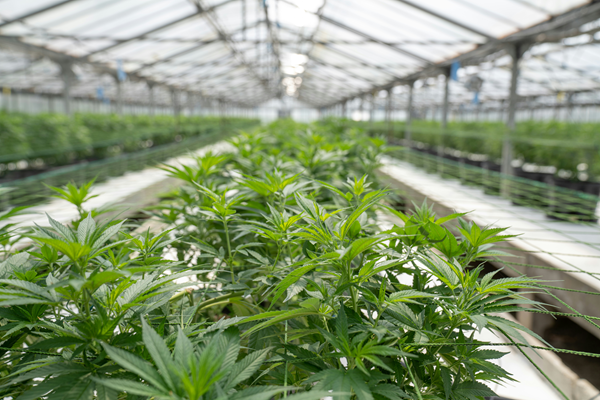
Cannabis is once again in the news in South Africa, with the recent announcement by various government departments of a national cannabis master plan to establish a formal cannabis and hemp industry. At the same time, the government has a long-standing commitment to protecting its local biodiversity, which is embodied in the National Environmental Management: Biodiversity Act 10 of 2004 (the NEMBA). Among its other functions, the NEMBA serves to regulate biotrade and bioprospecting by means of a permit system. Conducting bioprospecting or biotrade activities without a permit is an offence, and can result in a fine of up to ten million Rand and/or imprisonment for up to ten years. The permit process itself is quite involved and requires, among other things, the conclusion of suitable Material Transfer Agreements (MTAs) and Benefit Sharing Agreements (BSAs) with any access providers and/or traditional knowledge holders relevant to that specific instance of biotrade or bioprospecting.
To understand when the NEMBA is in play, one must conduct a three-fold enquiry:
- Firstly, is the activity bioprospecting as understood by the Act?
- Secondly, is the bioprospecting activity being done with an Indigenous Biological Resource (IBR) in terms of the Act?
- Finally, are there any exemptions or exceptions which would exclude that particular IBR from the operation of the Act?
For the first enquiry, “bioprospecting” in relation to IBRs means any research on, or development or application of, IBRs for commercial or industrial exploitation. In practice, this is broad enough so that almost any activity related to IBRs which has a commercial aim in mind counts as bioprospecting. For the second enquiry, IBRs include any indigenous animal, plant or other organism of an indigenous species (whether living or dead), as well as any derivatives thereof, including compounds or genetic material derived from such an indigenous species. It also includes cultivars, strains, derivatives, hybrids or fertile versions of indigenous species, as well as exotic species which have been altered to include genetic material or compounds found in any indigenous species. In general, anything which flows from an indigenous species may be considered an IBR.
And here, since the definition of an “indigenous species” in terms of the NEMBA means a species that occurs, or has historically occurred, naturally in a free state in nature within the borders of the Republic, but excludes a species that has been introduced in the Republic as a result of human activity, we finally arrive at the impact on cannabis and hemp. Cannabis, although extensively cultivated, is one of those plants that can survive on its own in nature (the name ‘weed’ is very apt here). It was also introduced into the country far enough in the past that the exact mechanism for its arrival is uncertain, with the tentative scholarly consensus being that Arab traders may have introduced it in the 1300s. In such circumstances, there is a possibility that Department of Forestry, Fisheries and the Environment (DFFE) may take the view that cannabis is an IBR.
For the final leg of the enquiry, we look to exclusions. The NEMBA currently excludes genetic material of human origin, exotic plants and animals other than those mentioned above, and IBRs listed in the International Treaty on Plant Genetic Resources for Food and Agriculture (the Treaty). The Minister also has the power to exempt specific species and activities by way of notice, something which has already been done for species used in the international cut flower and ornamental plant markets. At present, the Treaty does not list cannabis, and we are unaware of any notice by the Minister declaring an exemption for cannabis or hemp.
Such an exemption may well be a logical next step if the intention by government is to create a formal cannabis and hemp industry on a mass scale. Alternatively, should government wish to compensate local communities for the potential value inherent in the local landraces and the traditional knowledge now associated with them that have been developed in South Africa over time, then a clarification of the status of cannabis as an IBR in terms of the NEMBA would be welcome.
Meanwhile, it remains to be seen how the cannabis industry as a potential source of IBRs will progress. We will continue to monitor developments and provide updates as they arise.
PHOTO: SOURCED
INFO SUPPLIED