












South African household services company Maid4U is expanding its franchise footprint as part of its mission to bring greater professionalism, structure and dignity to the country’s domestic services sector.
The company’s franchise model is built around a widespread but often overlooked challenge. Families need reliable domestic workers, nannies, caregivers and gardeners, while workers need training, fair employment practices and access to sustainable job opportunities.
Maid4U connects these needs through a structured service offering that includes worker screening, vetting, recruitment, practical training and support with employment administration.
The business also assists households with employment contracts, payroll administration, UIF registration and Compensation Fund compliance. This helps employers navigate their responsibilities while creating clearer and more sustainable working relationships.
For founder and CEO Lindiwe Shibambo, the business is rooted in personal experience.
Shibambo’s first job was as a domestic worker. She entered homes containing appliances she had never used but was expected to operate without training or guidance. There was no employment contract, clear job description or structured work schedule.
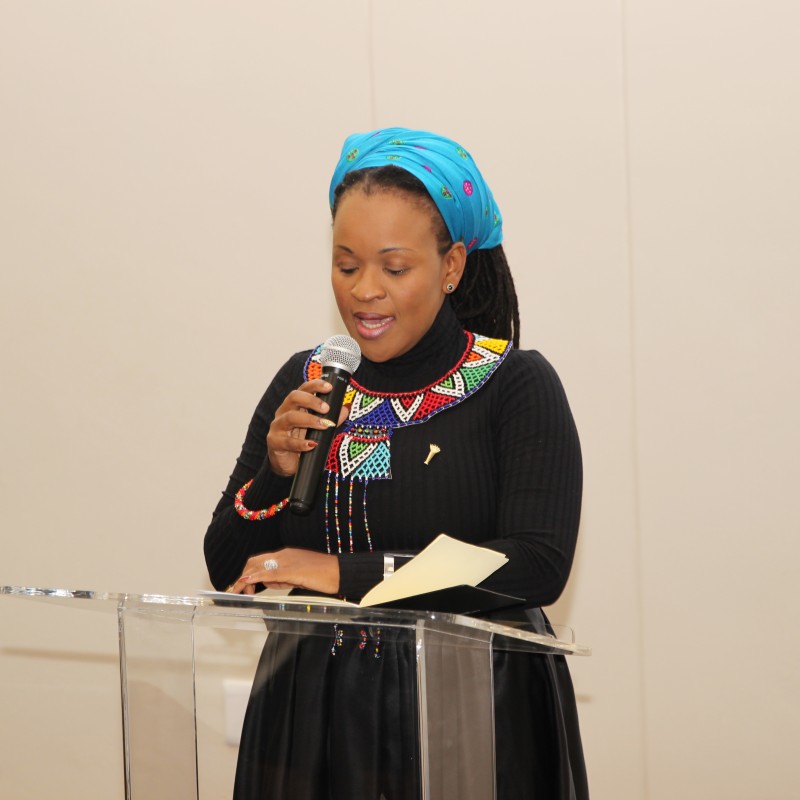
“The experience showed me that both workers and employers were being failed by the lack of structure in the sector,” says Shibambo.
“Domestic workers were expected to arrive fully equipped for the job, often without any formal training. At the same time, households had few reliable systems for recruitment, compliance or managing expectations. Maid4U was created to close that gap.”
From personal experience to a replicable business
Shibambo registered Maid4U in 2008, with the business becoming fully operational following the 2010 FIFA World Cup.
Within its first six months of operation, Maid4U had serviced more than 100 households. As demand grew, the company developed documented operating procedures, training programmes and quality-control systems that could be replicated in different markets.
Franchising became the next step in taking the model beyond a single operation.
“Our growth confirmed that the challenges experienced by families and domestic workers were not limited to one area,” says Shibambo.
“Franchising allows us to establish locally led businesses closer to the communities we serve. Each franchise can help more households, train more workers and create employment while operating according to consistent Maid4U standards.”
The model presents an opportunity for entrepreneurs seeking to enter an established service sector with recurring demand. Franchisees gain access to Maid4U’s brand, operating systems, recruitment processes, training programmes and experience in household employment services.
Building businesses while professionalising a sector
Maid4U’s expansion strategy places franchise owners at the centre of local job creation.
Rather than viewing domestic services as informal work with limited prospects, the company approaches the sector as a professional service industry that requires trained people, accountable businesses and measurable standards.
Training remains central to this approach. Maid4U’s programmes are designed around the practical requirements of household employment and aim to give workers skills that strengthen their employability and career prospects.
The company is also working towards expanding access to nationally recognised qualifications within the sector.
“Professionalisation is not only about improving the customer experience,” says Shibambo.
“It is about ensuring that the people doing this work are respected, properly prepared and given an opportunity to build more secure livelihoods. When workers are trained and employers understand their responsibilities, the entire relationship becomes healthier.”
A South African growth story
Maid4U’s journey reflects the potential for South African entrepreneurs to build commercially sustainable businesses by solving everyday social and economic challenges.
The company is now using franchising to broaden its reach while maintaining the systems, training and service standards that supported its early growth.
“What began with my own experience of uncertainty has grown into a business model that can create opportunities for workers, households and entrepreneurs,” says Shibambo.
“We are demonstrating that domestic services can be professional, compliant and commercially viable, while still placing dignity and people at the centre of the business.”